Linen or Cotton for a Loose Summer Shirt?
Linen or cotton for a loose summer shirt? Compare their feel, creases and care habits to choose a fabric whose appearance and upkeep suit you.
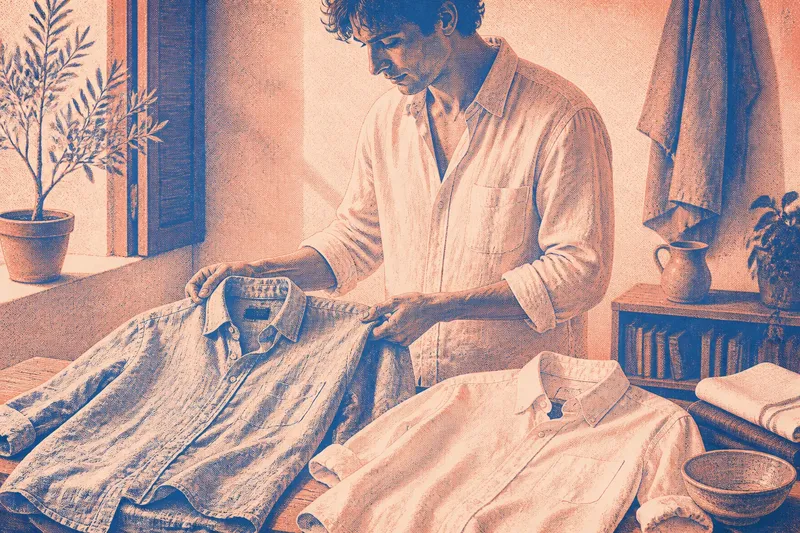
A loose summer shirt comes off its hanger with a different sort of promise in linen than in cotton: one looks ready to crease on the way to the door; the other may look smoother, or simply softer from wear. Choosing linen or cotton for a loose summer shirt is less a question of which fabric is “better” than of which surface, drape and laundry routine you want to live with.
What the fibres feel like
Linen is made from flax fibres. In a shirt, it often feels dry, crisp or slightly textured against the hand, though the exact sensation depends on the yarn, weave and finish. A loose cut lets air move between the cloth and the body, while linen’s open, irregular surface gives the shirt a relaxed character even when it is freshly pressed.
Cotton can feel smooth and soft, but it is not one fixed texture. A fine poplin tends to have a neat, close surface; cotton voile feels light and airy; a brushed or washed cotton can feel more broken-in. The fibre name alone tells you less than the fabric’s construction and finish.
Try pinching a section of fabric between your fingers, then letting it fall. Linen often springs back with a little texture still visible, while a smooth cotton may settle into a flatter fold. This is only a clue, not a verdict: heavier cottons and finely woven linens can complicate the usual impression.
How each fabric creases
Linen’s creases are part of its public character. It tends to develop visible folds at the elbows, across the front and where a bag strap presses against the shoulder. Rather than treating every crease as a fault, many people prefer the soft, irregular finish that develops through a day’s wear.
Cotton creases too, particularly in a loose shirt that is folded, sat in or left damp in a laundry basket. A smooth, tightly woven cotton can look tidier after pressing, while a washed or textured cotton may show its folds without appearing especially formal. The distinction is usually one of degree and appearance, not a choice between creasing and never creasing.
Think of the two fabrics as different paper: linen resembles a sheet that keeps a visible fold, while some cottons behave more like paper that lies flatter once smoothed. Neither is immune to handling; the useful question is whether the marks look like part of the shirt or like a job left unfinished.
Care habits in practice
Both fabrics benefit from a little attention to the care label. Washing temperature, detergent, drying advice and pressing instructions vary with the weave, dye and finishing treatments, so the label and maker’s directions take precedence over general habits.
- For a softer finish: avoid overloading the washing machine, which can leave shirts more tangled and creased.
- For fewer hard folds: take the shirt out promptly after washing and smooth the placket, collar and sleeves before drying.
- For a crisp appearance: press while the cloth is slightly damp if the care instructions allow it, using the iron setting suited to the garment.
- For a casual appearance: reshape the shirt by hand and let it dry on a hanger, accepting some creasing rather than pressing every panel.
- For storage: hang a shirt that you want to wear soon; fold it neatly if drawer space or travel makes hanging impractical.
Linen is often chosen by people who are content to wear its creases and may prefer to steam or press only the most visible areas. Cotton can suit someone who likes a smoother finish and is willing to iron, though a deliberately relaxed cotton shirt may need little more than reshaping after washing. Neither fibre automatically means low effort; the cloth’s finish and your standards do much of the deciding.
Which fabric suits you?
Imagine you are choosing a loose shirt for a warm weekend, and your cotton option is a smooth poplin while the linen is visibly slubby. If you want a composed look for a lunch where you will sit and travel, the poplin may better suit your preference for a flatter front; if you like a shirt that looks relaxed after being worn, the linen’s changing creases may be welcome. The observable difference is the finish you see after ordinary handling, not a promise that either fabric will stay perfectly arranged.
Consider where the shirt will be worn, too. For a day that involves carrying a shoulder bag or sitting for long stretches, both fabrics will show contact and folds, but linen tends to make those marks more conspicuous. A cotton with a washed surface can disguise a little rumpling, while a smooth cotton may make it easier to spot.
Also consider how you handle laundry. If you dislike ironing, look for a fabric and finish whose natural texture already appears intentional. If you enjoy a sharply pressed collar and a smooth front, a cotton weave that responds well to pressing may be the more satisfying choice.
What should you check?
Is linen always cooler?
Not necessarily. The shirt’s weave, weight, fit and finishing all affect how it feels in warm conditions, so a loose, lightweight cotton may feel more comfortable to one person than a densely woven linen. Compare the actual cloth rather than relying on the fibre name alone.
Does cotton need less ironing?
Some cotton shirts look smoother after washing, but cotton can still crease, especially if it is left crumpled or dried carelessly. A textured or washed cotton may be chosen precisely because its folds are less noticeable.
Can linen be worn without pressing?
Yes, if you like its relaxed appearance. Reshape it after washing and hang it to dry; pressing remains an option for a collar or placket that you want to look sharper.
Which fabric softens with wear?
Both can feel different after repeated washing and wearing, depending on their yarns and finishes. A linen shirt may lose some of its initial crispness, while cotton can become softer too; check the garment’s care directions to preserve the finish you prefer.
Choose the finish you welcome
When comparing linen or cotton for a loose summer shirt, decide first how you want it to look after an ordinary day, not just on the hanger. Linen suits a visible, lived-in crease; cotton offers more choice between smooth and textured surfaces, with care needs that still depend on the particular cloth.
If possible, handle the shirt in person: rub the fabric lightly, inspect how the front falls and check whether its creases seem pleasing or bothersome. That small decision is more useful than a fibre label on its own, and it leaves the ironing board with less authority than it usually claims.